
PATRIVA / Notes
Why Good Virtual Assistants Leave (and How to Break the Cycle)
You finally found a great virtual assistant. They learned your tools, figured out how you like your inbox handled, and started catching problems before you saw them. Then, a few months in, they gave notice. Or worse, they simply stopped replying. If that story sounds familiar, you are not alone, and it probably was not your fault. Virtual assistant turnover is one of the most common complaints business owners raise when they talk about remote help. The good news is that most of it is predictable. And what is predictable can be designed around. This post looks at why VAs leave, what it really costs you, and the conditions that make good assistants stay for years.
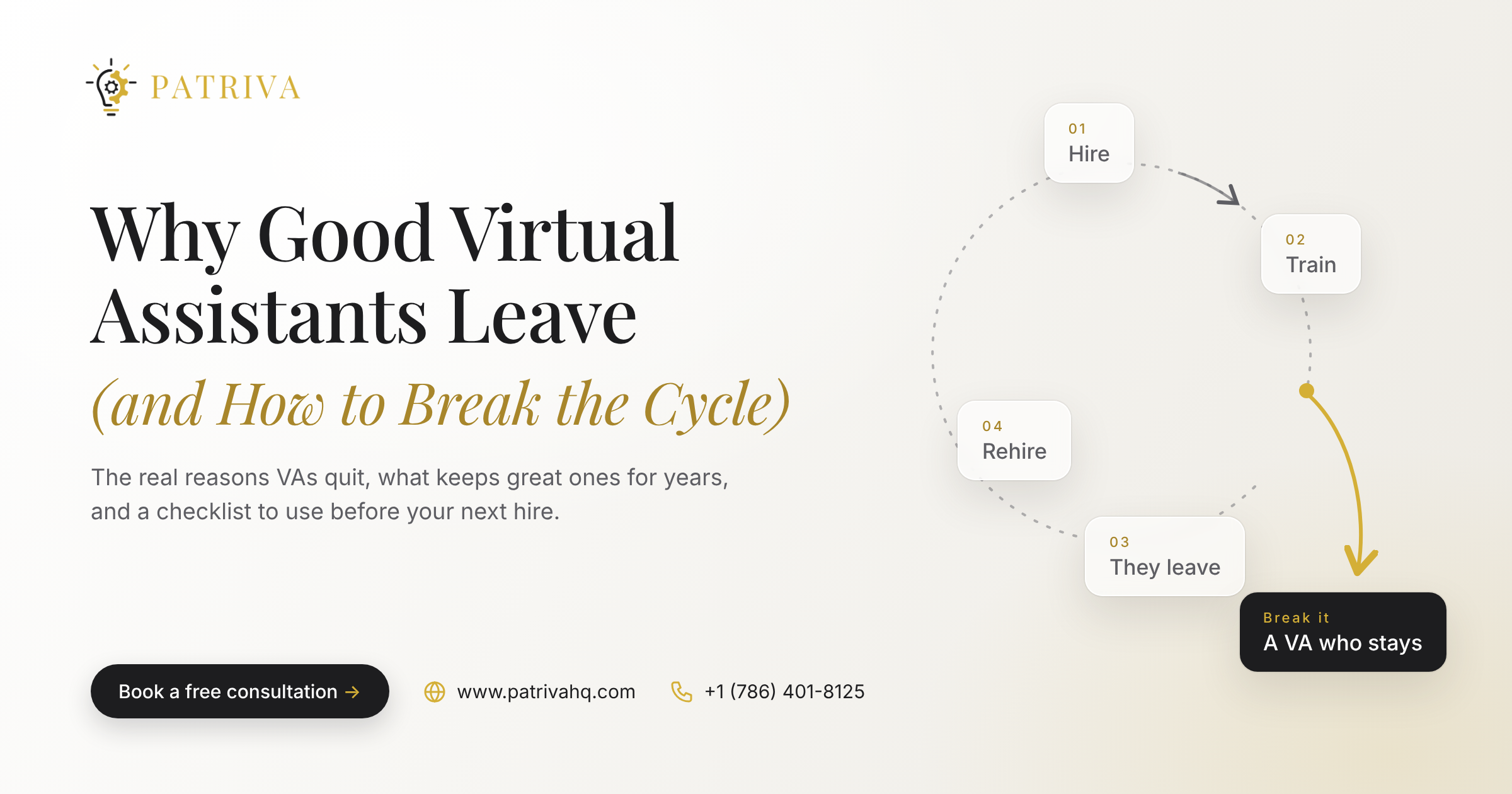
When an employee in your own office leaves, you feel it. When a VA leaves, you often feel it more, because so much of their value lives in their head.
Think about what walks out the door:
Context. Which clients need a gentle touch, which vendors always invoice late, where the real version of that spreadsheet lives.
Momentum. The weeks you spent training, correcting and explaining.
Trust. The confidence that a task handed off is a task handled.
Then there is the restart. You write the job post again, interview again, train again and wait for the new person to get up to speed. During that gap, the work lands back on your desk. For a small team, that can set you back a full quarter.
So the real question is not "How do I find a VA?" It is "How do I find a VA who stays?"
The Real Reasons VAs Leave
Most VAs do not leave because they are flaky. They leave because the arrangement around them is unstable. Here are the patterns that come up again and again.
1. The job is not really a job
Many remote VA arrangements are gig contracts. No benefits, no paid leave, no career path, and no guarantee the work will be there next month. A thoughtful, capable person in that position will keep looking for something more secure. That is not disloyalty. It is common sense.
When the role is a real job with real benefits, the math changes. Staying becomes the smart choice, not the risky one.
2. They are working alone
A home-based VA often has no manager nearby, no colleagues to ask, and no one who notices when they are struggling. Small frustrations build quietly. By the time the client hears about it, the VA has already decided to leave.
Isolation is a retention problem, not just a morale problem.
3. Nobody is investing in their growth
Good assistants want to get better. If the role offers no training, no feedback and no sense of progress, the strongest people are usually the first to move on. The ones who stay are not always the ones you would choose.
4. The setup works against them
Unreliable power, a shaky internet connection or a crowded home workspace makes the job harder every single day. Over time, that friction wears people down, and it also makes them look less reliable than they are.
5. The client relationship is unclear
Vague expectations, shifting priorities and feedback that only shows up when something goes wrong all push people away. This one is partly on us as clients, and it is worth owning.
What Actually Keeps Good VAs
Retention is not about perks or pep talks. It comes from structure. The VAs who stay for years usually have a few things in common.
Real employment and benefits
A stable salary, benefits and local employment protections give a VA a reason to build a career with you instead of treating your work as a stopgap. This is the single biggest lever, and it is also the one most freelance arrangements cannot offer.
A team and a supervisor
Working alongside colleagues, with a supervisor on site, means problems get caught early. Someone notices when a VA is overloaded. Someone helps when they are stuck. Someone coaches them before a small issue becomes a resignation.
A workplace built for the work
A proper office with stable power and internet removes a whole category of daily stress. It also creates a routine and a professional identity that many people value more than they expected.
Growth inside the role
Training, feedback and the chance to take on more responsibility give strong assistants a reason to stay and get better. When a VA can see a future in the role, they invest in it.
Continuity when life happens
Even the best VA gets sick, takes leave or has a family emergency. When there is a team and a backup process behind them, a short absence does not become a crisis, and the VA does not feel guilty or pressured to quit over it.
The Client's Side: Habits That Help VAs Stay
The structure around a VA matters most, but how you work with them matters too. A few habits go a long way:
Write it down. Clear SOPs reduce frustration on both sides.
Give feedback early and often, not only when something breaks.
Share the why. VAs who understand your goals make better decisions.
Recognize good work. A short "this was great" is easy to give and easy to remember.
Keep priorities steady. If they must change, say so out loud.
Retention Checklist: Questions to Ask Before You Hire
Use this list when you are comparing VA options, whether that is a freelancer, a marketplace or an agency.
Is the VA a real employee with benefits, or an independent contractor?
Who supervises the VA day to day, and are they in the same place?
Does the VA work from a professional office or from home?
What happens to my work if my VA is sick, on leave or leaves for good?
Is there ongoing training and coaching, or only initial onboarding?
How is the VA's own performance and wellbeing checked, not just their output?
Who keeps my processes and documentation if the person changes?
If the answers are vague, expect turnover. If the answers are specific, you are looking at a model built for people to stay.
Retention Is a System, Not Luck
It is tempting to think a long-term VA is just a lucky hire. In practice, the assistants who stay are usually the ones who were given a real job, a real team and a real place to work. Reliability and retention come from the same source: a system that supports the person doing the work.
That is the model we have built at PATRIVA. Our VAs are local employees with benefits, working from a real PATRIVA office with on-site supervision and backup in place when someone is out.
If you have been through the rehiring cycle a few times and want to talk through what a steadier setup could look like for your business, we would be glad to have that conversation. No pressure, just a practical chat about what you need.
Now is the time to talk about it, book a free discovery call with our team here: https://calendar.app.google/5kDAbhJZN7iaMCYt8